My Jar Didn't Seal - What Do I Do Now?
You followed the process, processed your jars, and left them to cool. But in the morning, one or more lids are still flexing up and down when you press the center. The jar has not sealed. This is frustrating but common, and it does not necessarily mean the contents are ruined.
How to Tell If a Jar Has Sealed
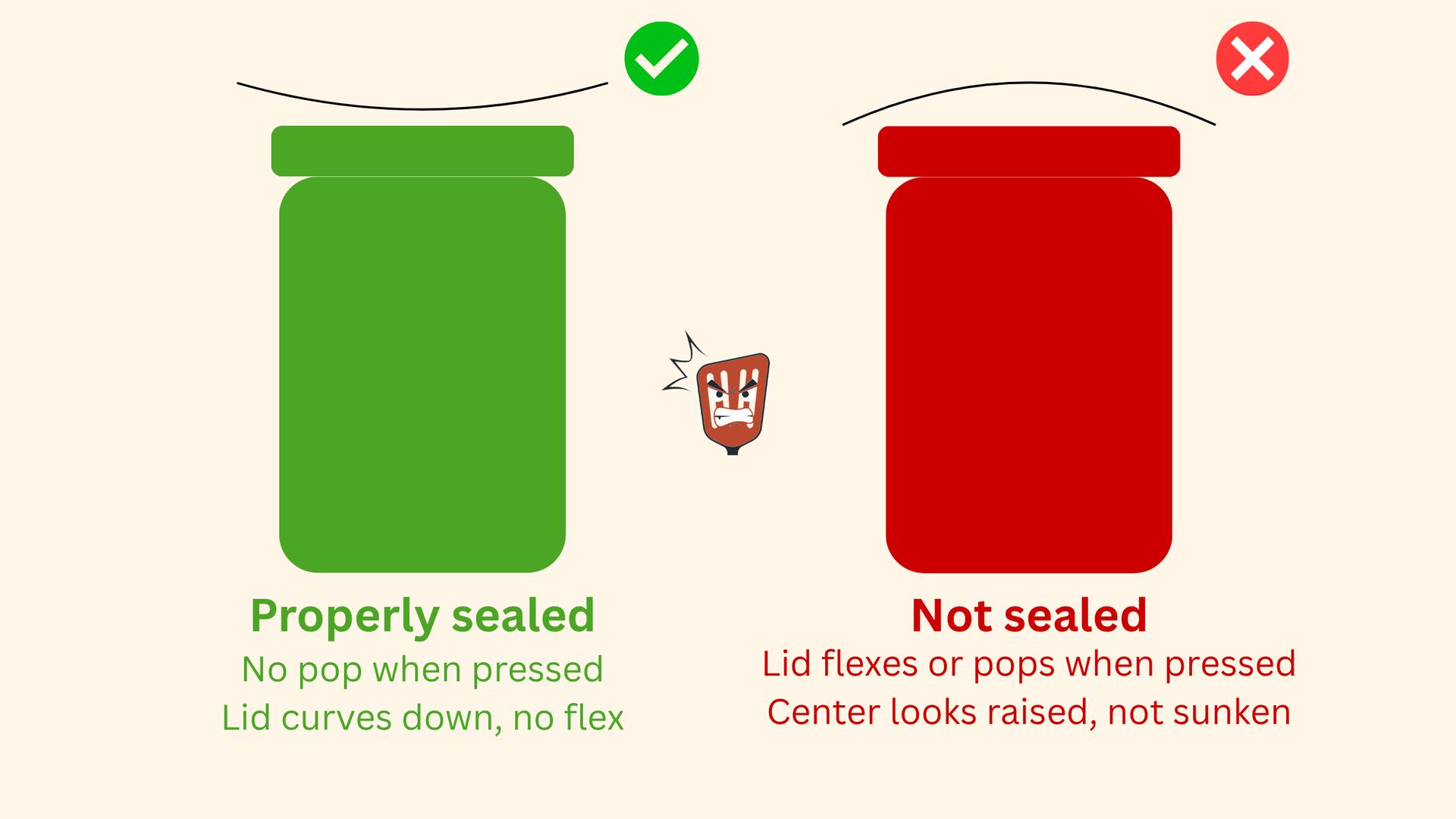
A properly sealed jar makes an audible "ping" as it cools. The lid will be slightly concave (bowed inward) and will not flex when you press the center - it should feel completely firm with no movement at all.
An unsealed jar has a lid that clicks up and down when pressed. The surface may be flat or slightly convex.
Check all jars after they have cooled completely - at least 12 hours after processing. Do not disturb jars while still warm.
Why Jars Fail to Seal
Understanding why the seal failed affects whether reprocessing is likely to work:
- Rim not cleaned properly - food residue or grease on the rim prevents a complete seal. Always wipe the rim with a clean damp cloth immediately before applying the lid
- Lid defect or damaged seal - the rubber compound on the underside can be cracked or damaged, sometimes invisibly
- Jar rim chip or crack - even a small nick prevents a complete seal; run your finger around the rim before filling
- Insufficient processing - water not at a full rolling boil, or processing time cut short
- Jar not properly submerged - jars need at least 2-3cm of water covering them throughout
- Lid applied incorrectly - for two-piece lids, the ring should be "fingertip tight," not forced; over-tightening prevents the lid from venting properly during processing. For twist-off lids, screw the lid down until snug - it shouldn't require force, just a firm turn until it stops easily
Option 1: Reprocess Within 24 Hours
If you discover an unsealed jar within 24 hours and the contents look and smell normal, reprocessing is viable.
Before reprocessing, check:
- The jar rim for chips or cracks (run your fingertip around the entire rim)
- The food for any signs of spoilage - off smell, unusual color, foam or bubbles
- The lid for any visible damage to the sealing compound
To reprocess:
- Remove the lid (and ring, if using a two-piece system)
- Wipe the rim completely clean
- Apply a fresh new lid (not the one that failed)
- For two-piece lids, apply the ring to fingertip tight. For twist-off lids, screw down until snug
- Reprocess for the full original processing time
Important: Reprocessing causes some quality loss - the food is cooked again, which can affect texture, color, and flavor. Use a fresh lid; the sealing compound on the failed lid has already been compressed and may not seal again.
Option 2: Refrigerate and Use Promptly
If more than 24 hours have passed, or if you prefer not to reprocess, refrigerate the unsealed jar immediately and treat it like an open jar of the same product:
- Jams and jellies: 3-4 weeks refrigerated
- Pickles: 3-4 weeks refrigerated
- Fruit preserves: 2-3 weeks refrigerated
- Low-acid vegetables (pressure canned): use within a week
Label the jar with the date it went into the refrigerator.
Option 3: Freeze It
Freezing is a good option for jams, fruit preserves, and sauces. It preserves quality without any food safety concerns.
- Transfer to a freezer-safe container (not all glass canning jars are suitable for freezing)
- Leave at least 2-3cm headspace for expansion
- Label with contents and date
- Keeps well for 6-12 months
When to Discard Without Reprocessing
Discard if:
- The lid was visibly bulging outward before you opened it (indicates gas production - a sign of spoilage)
- The contents smell off, fermented, or otherwise wrong
- There are visible signs of mold
- The food spurts or fizzes when you open it
- More than 24 hours have passed and the food was a low-acid product (vegetables, meat, fish) that requires pressure canning - unsealed low-acid foods can harbor dangerous pathogens without obvious signs
For high-acid products like jams, jellies, and pickles that have been refrigerated promptly, the safety risk from an unsealed jar is low. For low-acid products, take no chances - if in doubt, discard.
Preventing Seal Failures in Future
- Use new lids every time - reusing lids for water bath canning is one of the most common causes of seal failure
- Clean the rim thoroughly before putting on the lid every time
- Inspect jars before use - discard any jar with rim damage
- Check lids before use - discard any with uneven or damaged sealing compound
- Do not overtighten - fingertip tight only (two-piece) or snug without forcing (twist-off)
- Full rolling boil throughout the entire processing time
Summary
An unsealed jar can often be salvaged: reprocess with a fresh lid within 24 hours, refrigerate and use within a few weeks, or freeze for longer storage. This applies to both two-piece and twist-off lid systems. For high-acid preserves like jams and pickles, an unsealed jar that goes promptly into the refrigerator is safe to use. For low-acid products, discard if in any doubt. Most seal failures are preventable with new lids, clean rims, and correct processing.