Contains: Milk, Eggs, Sesame
About allergensMost gluten-free breads are a substitution game. Wheat flour gets replaced with a blend of starches - rice flour, tapioca, potato - that behave similarly in the oven. The result can be convincing, but the nutritional story rarely improves. You still end up with a carbohydrate-heavy loaf that spikes blood sugar much the same way as regular white bread.
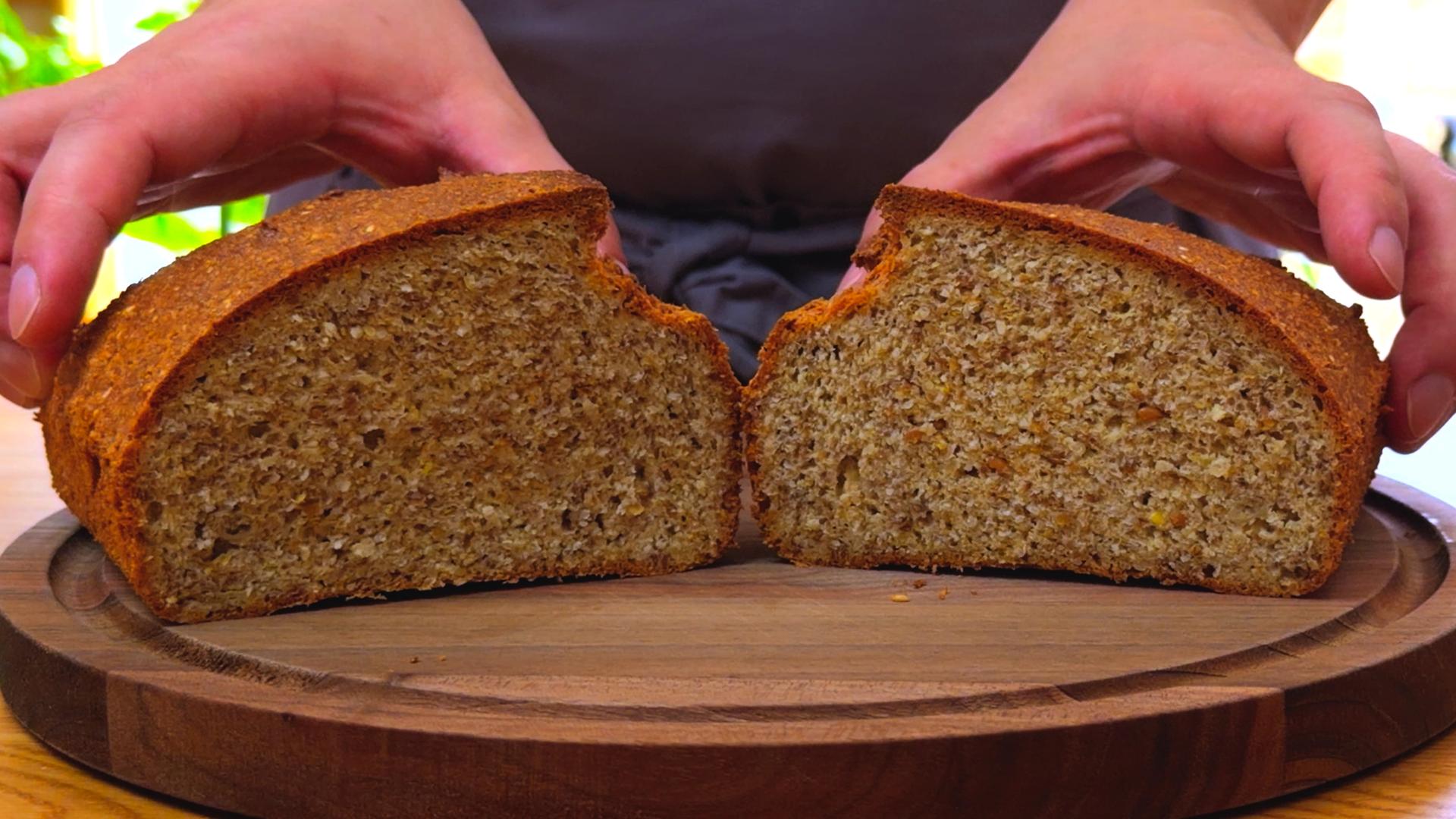
This loaf works differently. There is no flour in it - not even gluten-free flour. The structure comes entirely from ground sesame and flax seeds, bound together with eggs and milk. It is a bread made from whole foods, and it behaves like one.
What makes these seeds work
Sesame seeds form the bulk of the loaf. Their high oil content gives the bread a dense, moist crumb, and when ground into a coarse meal, they provide just enough structure to hold the loaf together without any added starch. The flavor is mild and nutty - it deepens considerably as the bread bakes.
Golden flax seeds do something that most seeds can't: when ground and mixed with liquid, they release a gel that mimics some of the binding properties of gluten. This is what keeps the crumb from crumbling. Flax also contributes the majority of the bread's dietary fiber and is one of the best plant-based sources of omega-3 fatty acids.
Together they create a batter dense enough to bake without collapsing, and flavorful enough to eat plain.
Why this bread works for blood sugar management
Conventional bread is almost entirely fast-digesting carbohydrate - it raises blood glucose quickly, which triggers a sharp insulin response. This loaf addresses that at the source. Per serving it contains around 15g of total carbohydrate, but 8.5g of that is dietary fiber, which the body doesn't convert to glucose. The net carb load lands closer to 7g per slice - less than half of a standard slice of white bread. On top of that, the high fat and protein content slows digestion further, producing a gradual glucose curve rather than a spike.
For people managing type 2 diabetes or insulin resistance, this reduces the chronic glucose burden that drives the condition. For people with type 1 diabetes, the benefit is different but equally real: smaller, slower glucose rises are far easier to match with an insulin dose, which means fewer unpredictable swings. Bread is one of the hardest foods to navigate in both cases - a loaf that genuinely fits without asking you to give it up entirely is worth keeping around.
Flaxseed in particular has been studied in the context of glycemic control, with several trials linking daily consumption to modest improvements in fasting glucose and insulin sensitivity - likely due to its fiber content, lignans, and omega-3 fatty acids.
A few things worth knowing before you bake
- Grind the seeds to a coarse, sandy meal - not smooth. The moment the mixture starts clumping or looks oily, stop. Over-blending turns it into seed butter, which will not bake the same way.
- Xanthan gum is a small but load-bearing ingredient. It improves the elasticity of the crumb and prevents the loaf from falling apart when sliced. Don't skip it.
- The batter will be noticeably thicker and stickier than anything you've made with conventional flour. That's correct. Smooth it into the pan with a slightly wet spatula and don't try to work it like dough.
- Let the bread cool completely before slicing. The crumb firms up as it cools - cutting into it warm will cause it to crumble.